American freelancers now need to know how to do search engine optimization (SEO). Clients want content that does well in search results, gets people to take action, and doesn't change when Google upgrades its algorithms. This post clearly and practically illustrates important SEO concepts, such as on-page optimization and meta tags, using real examples from US companies like HubSpot and step-by-step instructions with free tools. I have also included a section on meta tag optimization.
It sounds like this is about my own website, which is what I care about.

Why Search Engine Optimization Will Still Be Important for Freelancers in 2025
Search engines are still the most essential way for American businesses to get traffic. Google's algorithm has gotten smarter over the years, but its purpose has always been the same: to give users the best results for their search.
SEO gives freelancers:
- A steady flow of possible customers
- Customers who pay more and stay involved for longer periods of time
- Power in your field
- Unlike hourly work, pay that can go up over time
By learning on-page SEO, you can manage how visible your site is. That is the base on which everything else is built.
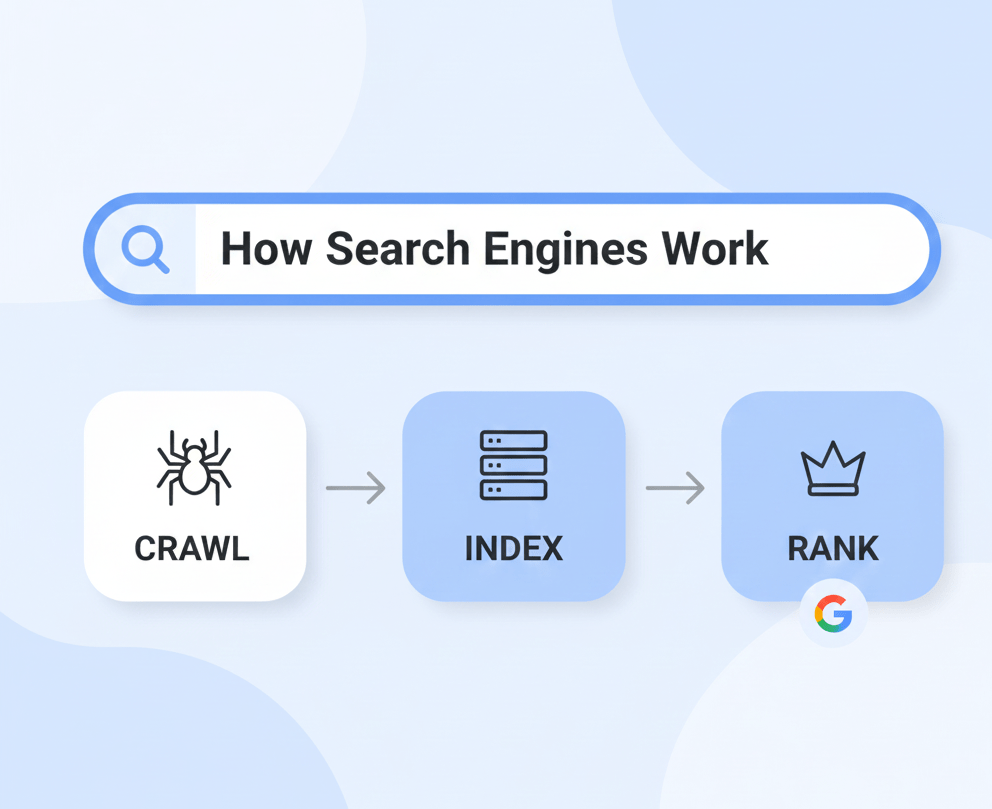
The Main Things That Search Engines Do
Before optimizing pages, it's important to know how the process works:
- **Google bots crawl** your website to find and index pages.
- **Indexing:** Google saves and organizes information from websites.
- **Google uses a ranking system** to decide where your page appears in search results.
It is your job to make each step easier for Google to understand.

Some key performance indicators are:
- Content relevancy
- Search purpose congruence
- Structure of the document (inside headings and annotations)
- Priority on user experience (mobile accessibility, efficiency)
- Connecting pages inside a site
This highlights the significance of on-page SEO.
The Importance of On-Page SEO and What Is It?
Everything that may be changed within the page itself is considered part of the on-page SEO. This includes:
- Keywords for the Title
- Detailed explanations of things
- Titles (H1-H6)
- Content quality and keyword usage
- Graphics and alternate language
- Links inside a website
- Structure for a Standardised Resource Locator
You have complete control over on-page optimisation, unlike backlinks or technical SEO, and it creates results straight away.
Use this on-page SEO checklist on every page.
Please make sure to use this checklist before posting any page.
1. Zero in on One Primary Keyword
Think about two or three related phrases and a major keyword.
Case in point:
Tips for Writing Effective SEO Content in 2025
Search engine optimisation (SEO) for American freelancers and American SEO content writers
2. Name Tag Improvements
- Between fifty and sixty characters
- Make advantage of the major keyword
- Make it intriguing so people will click on it.
Example: SEO Writing Strategies 2025: A Practical Guide for U.S. Workers Who Don't Have a Job
3. Make a meta description that catches people's attention
- between 155 and 155 people
- Lower the value
- Use the keyword in a natural way.
Example: Find out how to write SEO articles that will still function in 2025. Independent contractors in the United States can get help with keyword research, on-page SEO, and meta tag optimization.
4. Use a separate H1 heading
Your H1 tag should be close to the title tag so that it accurately shows what people are looking for.
5. Use H2 and H3 headings to organize your content.
Every section needs to have a subtopic or a keyword that is related to it. This makes the webpage easier to read and better for search engines.
6. Raise the First Hundred Words
In the beginning, use the primary word in a natural way.
7. Make URLs easier to read
URLs that are short, easy to read, and focus on keywords do well.
Example: guidelines-for-writing-for-search-engine-optimization-seo-in-2025
8. Include Pictures with Clear Explanations
- Using a name that tells you what the files are
- Use contextual alt text instead of too many keywords.
9. Linking to Other Pages on the Same Site
Use descriptive anchor text to link to two or three pages on your site that are related.
10. Speed of Page and Mobile
Your website should load swiftly and work well on mobile devices. Google's top objective is to put mobile devices first.
A Guide for Beginners on Meta Tags
Tag for the Title
This is the title that you can click on in Google search results. It has a big effect on the click-through rate.
Suggested way:
- Put the keyword at the top.
- If you need to, you can add branding at the conclusion.
Summary of Metadata
It has an effect on traffic directly, even if it's not a ranking factor. A bad meta description could lead to a decline in click-through rates, which could hurt search engine rankings.
A Robot's Meta Tags
Used to manage indexing: noindex / follow. These should only be changed by people who know what they're doing.
HubSpot's SEO Blog Framework is a real-world example.
HubSpot is a great example of scalable SEO in the US.
The usual parts of a blog post are:
- Focused on the title's keywords
- Hypotheses that are clear and to the point
- Great introduction that addresses user concerns
- Materials for graphs and charts
- Requests for Action and Links Inside
No, they aren't thinking about it. This is a methodical way to improve your search engine rankings, and it works. As a freelancer, it would be smart for you to base your website and client projects on this framework.
A Complete Guide to Google Keyword Planner (Free Tool)
Google's Keyword Planner is a free and trustworthy place to get keyword data in the US.

Use the Tool First
- Set up a Google Ads account
- Commercials are not needed.
Step Two: Open the Keyword Planner
Under Tools & Settings, look for the Keyword Planner and then go to Planning.
The next stage is to come up with new keywords.
Type in a few short phrases like:
- Writing about the best ways to do SEO
- Writing articles that search engines can read
- As a freelancer, how to make your website more search engine-friendly
Step 4: Pick "United States" as the place to go
You have to do this. Always make sure that data is stored locally.
Step 5: Look at the results
Be aware of:
- Estimated number of inquiries per month
- Competition
- Bid at the top of the page (signal of commercial purpose)
Step 6: Fine-tune and Export
Download the CSV file and then use the following to order the keywords by importance:
- Goal that is clear
- Fair competition
- Search volume in the U.S. stays the same
Activities That You Can Do Yourself (Do These to Get Better at What You Do)
Task 1: Read a blog post by an important American
Find out what makes a website the best in the US and look into it.
- Tag for the Title
- Summary of the information
- A structured list of titles
- Length of the text
- Links that are on a website
- A picture of it
Write down how their actions compare to yours.
Task 2: Making the Page's Elements Better
Use an old thing and:
- Change the title
- Make sure the meta description is good.
- Change the H2 headers
- Make internal links stronger
Keep an eye on the outcomes for 30 days.
Third Exercise: Making a Map of Keywords
Draw a simple map:
- Informative keywords are what start blog postings.
- Commercial keywords are links to service pages.
- Transactional terms go to landing pages.
This is how SEO turns into a system. For example, if you are writing a college application guide, you could link to your essay word counter tool to help users check their word count limits.
Using infographics to improve search engine optimization
Graphical content makes things better:
- How long the tenant will be there
- Understanding by the user
- Links that could work
Use infographics to help you understand better:
- How search engines work
- A guide for on-page SEO
- The order of the information
Use the two PNG infographics you made wisely and include them in the material.
SEO content strategies for the US in 2025
Not algorithms, but humans reading your material should come first.
Don't just look at terms; make sure that terms and search intent are in harmony.
Cut out AI-generated content that isn't needed and make sure it is well-edited.
Use instances and points of view from actual life
Make it easier to read and scan.
Every once in a while, update old information.
Google's number one focus is usefulness, not quantity.
Final SEO Check Before Going Live
Before you hit "Publish," make sure:
- Meta and title optimisation
- A keyword that is really important
- Organized headings in a structured way
- Improvements to the visuals
- We have added links within the page.
- Confirmed speed and mobile device
If you don't pay attention to this, you can miss out on prospective ranks.
Final Thoughts
There is no magic involved with SEO. It is the act of being killed.
Freelancers in the US that know a lot about on-page SEO and meta optimization have an advantage over their competitors, platforms, and sources of income that aren't always reliable.
Be respectful of every page. If built correctly, it will do its job well for many years.