How to Make Your Flesch-Kincaid Grade Better: Tips for Readability in Grades 6–8
One of the best ways to make your writing easier to read, more fascinating, and better for search engines is to optimize your Flesch-Kincaid Grade Level. If you want to reach more people, write in a way that is easy for kids in grades 6 to 8 to read. This goes for blog posts, how-to guides, marketing copy, and UX jargon. Search engines like clear, simple language because people stay on pages longer when they can quickly understand them.
This complete guide will explain how the Flesch-Kincaid technique works, why Grade 6-8 is the ideal level for most online material, and how to make things easier to read in 2025. All of the suggestions are based on proven best practices for writing content, real-world writing methods, and SEO knowledge.
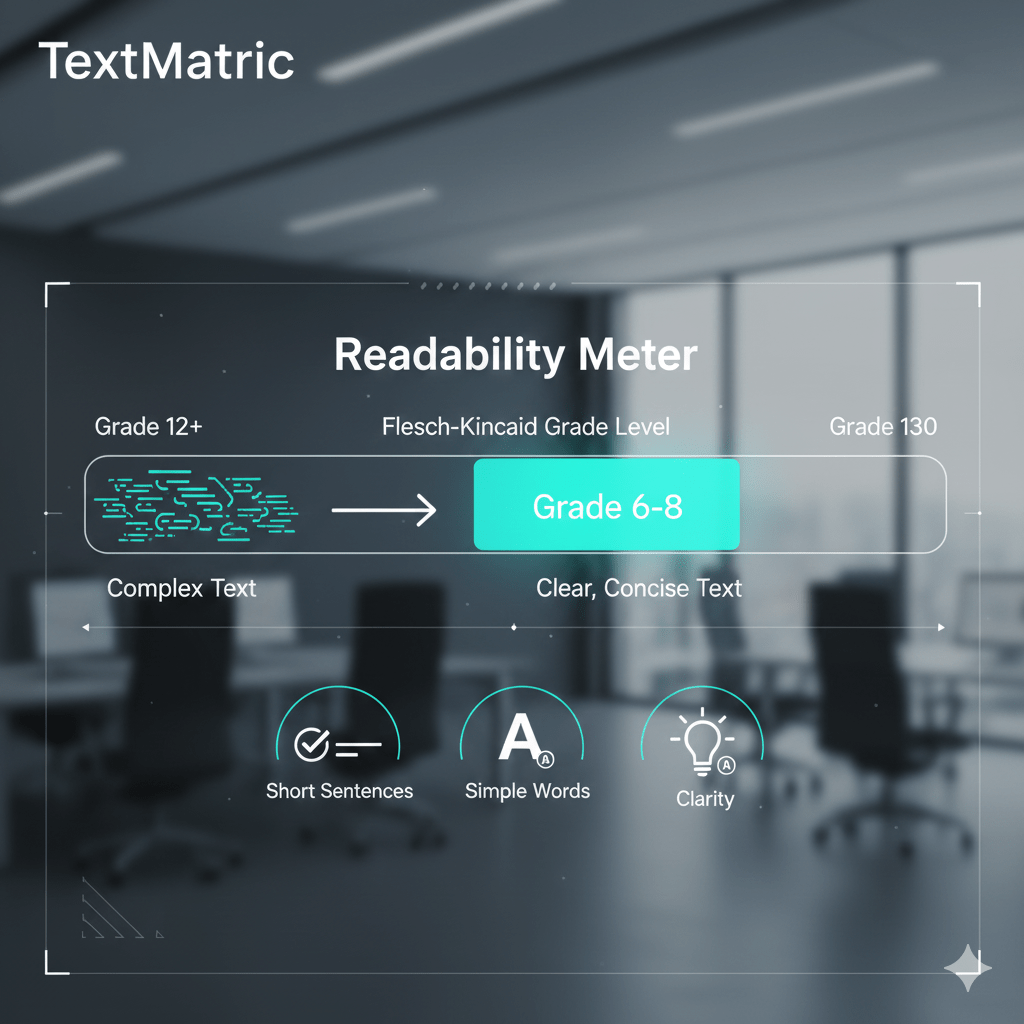
What is the Flesch-Kincaid Grade Level?
The Flesch-Kincaid Grade Level is a score that tells you how easy or hard it is to read something. There are two main things that go into calculating the score:
- The average length of a sentence
- The average number of syllables in a word
The ultimate result is a grade in school in the U.S. For instance: Grade 6 is easy for kids ages 11 to 12. Grade 8 is easy for 13- and 14-year-olds to read.
Why aim for Grade 6–8? This level is typically the best way to write for the web because it results in:
- Faster comprehension.
- Higher engagement, which search engines reward.
- Accessibility for non-native English speakers.
- Less cognitive load for all users.
The Importance of Grade 6-8 Readability for SEO in 2025
Search engines care most about how users feel, and clear writing is a big part of that. When people can readily read your content:
- People stay longer (lower bounce rates).
- More interaction: scroll depth, clicks, and shares.
- Conversions get better.
Google's current algorithms favor material that is clear, well-organised, and helpful. Writing that is too complicated can confuse readers. To reach as many people as possible, high-performing publishers often aim for a Grade 7 reading level.
How to Find Out Your Flesch-Kincaid Grade Level
To find out how readable your text is, use tools like the TextMatric Readability Checker or other tools such as Yoast SEO, the Hemingway Editor, or Grammarly. These tools find long sentences, hard words, and passive voice that need to be made easier in order to lower the grade level.
Helpful Advice for Raising Your Flesch-Kincaid Grade (Grades 6–8)
1. Make Your Sentences Shorter.
Long sentences are the main thing that makes reading scores go up. Try for sentences of **12 to 15 words** to keep the flow going. Break up long sentences into two or three shorter ones.
Poor: Writers often have a hard time being clear because they use long sentences that have a lot of different ideas.
Better: Writers have a hard time becoming clear when their phrases are overly long. Short phrases help readers stay focused.
2. Use Words That Are Easy to Understand.
A high number of syllables in your words makes your score go up a lot. Whenever you can, choose simpler words.
For example: Utilise becomes Use. Prioritize becomes Put first. This doesn't make your writing "basic"; it makes it more direct and professional.
3. Use the Active Voice Instead of the Passive Voice.
Active voice makes sentences easier to understand and less complicated. Try to use active voice 85–90% of the time.
Passive: The project was finished by the team.
Active: The team finished the project.
4. Split Up Big Paragraphs.
Readers often find it hard to read big blocks of text. Utilize short paragraphs (2–4 sentences), bullet lists, numbered lists, and clear headings. This makes it easier for both people and search engines to scan.
5. Use a Conversational Tone When You Write.
A conversational tone makes things less complicated by default. Use direct speech and pronouns like "you" and "we."
6. Use Less Technical Language.
If you have to use technical terms, make sure to explain what they mean. This keeps things clear and keeps readers interested, no matter what their background is.
7. Use Verbs That Are Forceful and Direct.
Change weak verb phrases to strong single verbs. For example, "Make a decision" means "decide." Direct verbs cut down on the number of words while making things clearer.
8. Use Clear Headers and Subheadings.
Before ranking your content, search engines look at how it is set up. Use titles with a lot of keywords and descriptive H2, H3, and H4 headers. This makes it easier to scan and lessens the weariness that comes from reading.
Common Errors That Will Hurt Your Readability Score
Don't make these common mistakes that make it hard to read:
- Sentences that are too long (over 18 words).
- Using too many polysyllabic words.
- Weak structure of the paragraph (large blocks of text).
- Too many sentences in the passive voice.
- No breaks for the eyes (no headings, lists, or white space).
SEO Benefits of Lowering Your Readability Score
If you can get your readability score from Grade 12+ down to Grade 6-8, your SEO results will increase a lot:
- More time spent on page.
- Lower bounce rates.
- Better metrics for engagement.
- More chances to get featured snippets and "how-to" content recognition.
Search engines give higher rankings to content that is easy to read and act on.
How to Stay Professional While Writing Simply
A common worry among writers is that work for grades 6–8 may look too simple. What makes professional writing stand out is how clear it is, not how complicated it is. You can maintain your authority in your content by:
- Using data that you can trust.
- Giving useful, actionable suggestions.
- Using proof and examples.
Writing clearly gives you more authority; it never takes it away.
Tools to Make Reading Easier
Here are the tools you can use to make things better right away:
- TextMatric Readability Checker: Quickly and accurately calculates your Flesch-Kincaid Grade Level.
- The Hemingway Editor: Focusses on long, complicated phrases and the passive voice.
- Grammarly: Gives tips for how to clarify grammar.
- Yoast SEO (for WordPress): Checks things like the length of sentences and the use of transition words to see how easy it is to read.
FAQs that are good for SEO
- What Flesch-Kincaid grade level should I aim for?
- For digital content, especially blog posts, landing pages, and educational resources, aim for grades 6–8.
- Does making something harder to read make it less professional?
- No. Writing clearly builds trust and authority.
- Does Google provide higher rankings to content that is easy to read?
- Not directly, but making things easy to read keeps users interested, which affects rankings.
- What is the best length of a sentence for grades 6–8?
- It is best to include 12 to 15 words in each phrase.
Last Thoughts
One of the best methods to make your site easier to read, better for users, and better for SEO is to raise your Flesch-Kincaid grade level. Readability for grades 6–8 helps you explain things effectively, get more people to read your work, and move up in search results. By focusing on shorter sentences, simpler words, and clear structure, you may create professional and easy-to-read content that ranks well.